Akamas Peninsula – Natural, Historical & Hiking Guide

Akamas, situated in the extreme north-west part of Pafos, is one of the most pristine and ecologically important regions in Cyprus. It combines wild natural landscapes, rich biodiversity, and deep historical heritage, making it a unique destination for hiking and exploration.
For a complete overview of hiking routes and topographical maps across Cyprus, see our Cyprus Hiking Maps Guide.
Natural Environment of Akamas
The Akamas Peninsula is famous for its unspoiled coastline, rugged terrain, and rare plant species. Many areas remain untouched, preserving their natural ecosystem and endemic flora.
Beyond its natural value, Akamas is also a cultural landscape shaped by thousands of years of human presence, from the Chalcolithic period through the Byzantine era.
Historical Significance
Akamas has been inhabited since prehistoric times and later developed during the Hellenistic, Roman, and Byzantine periods. Archaeological evidence shows small settlements, religious sites, and rural communities scattered across the peninsula.
Many of these settlements were later abandoned due to historical invasions and population movements, leaving behind chapels, ruins, and cultural landmarks.
Geology of Akamas
The geology of Akamas is highly complex and diverse, making it one of the most interesting geological regions in Cyprus.
It includes:
- formations from the ophiolite complex of Troodos Mountains
- sedimentary rock layers
- and formations from the Mamonia complex
The peninsula features serpentinite belts, gabbros, basaltic lava flows, limestone formations, and marine terraces shaped by erosion over millions of years.
Mineral Resources
Historically, Akamas had limited but notable mineral activity.
- Magnesite was mined and exported decades ago
- Copper and iron deposits exist but were never extensively exploited
- Limestone and bentonite formations occur in limited areas
Abandoned mining sites and shafts can still be found in parts of the region.
Landscape and Scenery
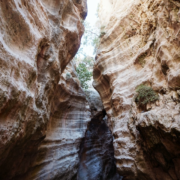
The landscape of Akamas is shaped by tectonic activity and erosion. A central ridge divides the peninsula, creating deep valleys, gorges, and coastal terraces.
Elevations reach nearly 500 meters, offering panoramic views of both inland forests and coastal areas.
This geological diversity makes Akamas a visually striking and highly varied hiking environment.
Hiking in Akamas Today
Today, Akamas is one of the most popular hiking and mountain biking destinations in Cyprus. The area includes coastal trails, forest paths, and sections of the European E4 long-distance trail.
Due to its remote terrain and limited signage, proper navigation tools are essential.
Why Hiking Maps Are Essential
Exploring Akamas safely requires accurate topographical maps because:
- mobile signal is often unavailable
- trails are not always clearly marked
- terrain can be steep and remote
Topographical maps provide:
- elevation and contour detail
- accurate trail routes
- offline reliability
- safer route planning
For an overview of hiking routes and regions across Cyprus, see our Cyprus Hiking Maps Guide.
Touring Guide of Pafos – Recommended Publication
For visitors interested in the history, villages and cultural heritage of the wider Pafos region, the Touring Guide of Pafos – Town & Countryside provides a detailed introduction to the area.
This guide includes:
- historical and archaeological sites
- traditional villages
- countryside exploration routes
- and detailed regional insights covering Pafos and Akamas
It is an essential companion for travelers who want to go beyond hiking and explore the cultural depth of the region.
Akamas remains one of the most untouched and valuable natural regions in Cyprus. Its combination of geology, biodiversity, and history makes it a top destination for hikers, nature lovers, and explorers.
Today, Akamas is one of the most popular hiking and mountain biking destinations in Cyprus. The area includes coastal trails, forest paths, and sections of the European E4 long-distance trail. A detailed Pafos Road map and Akamas Hiking Map can be particularly useful when planning routes through the peninsula.