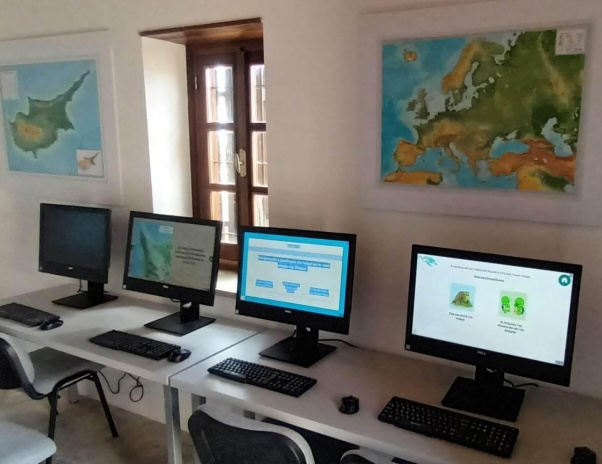
Museums have always played an important role in preserving history, protecting cultural heritage and sharing knowledge with the public. Traditionally, visitors explored museum collections through exhibitions, display cases, photographs, maps and printed information. Today, however, advances in digital technology are transforming the way museums communicate with their audiences, creating new opportunities for learning, exploration and engagement.
The modern museum is no longer simply a place where objects are displayed. It is increasingly becoming an interactive environment where visitors can discover stories, explore historical events and experience cultural heritage through innovative digital tools.
From traditional exhibitions to interactive experiences
Digital technologies are changing the relationship between museums and their visitors. Interactive applications, multimedia presentations and digital displays allow information to be presented in more engaging and accessible ways.
Touchscreen applications, for example, enable visitors to discover geographical information, explore historical timelines, examine archival material, and access additional content according to their interests. Interactive maps can reveal how settlements, landscapes and historical events have evolved over time, while multimedia presentations combine photographs, video, sound and animation to bring stories to life.
These technologies encourage active participation rather than passive observation, allowing visitors to explore museum content at their own pace.
Virtual Reality and Augmented Reality: experiencing the past
Virtual Reality (VR) and Augmented Reality (AR) are opening up new possibilities for cultural heritage interpretation.
Virtual Reality can recreate historical environments, archaeological sites and buildings, allowing visitors to explore places that may no longer exist or are difficult to access. Through immersive digital experiences, users can gain a better understanding of historical settings and events.
Augmented Reality adds digital information to the real-world environment, enriching exhibitions with three-dimensional models, animations, explanatory content and interactive visual elements.
These technologies can make complex historical and cultural subjects easier to understand, particularly for younger audiences, while offering museums new ways to present their collections and stories.
Interactive maps and Digital storytelling
Geography and cartography have always been closely connected to the interpretation of history and cultural heritage. Digital mapping technologies now offer museums powerful tools for presenting the geographical dimension of historical events, cultural landscapes and human activities.
Interactive maps can help visitors explore the development of towns and villages, discover archaeological sites, follow historical routes and understand the relationship between people and their environment.
By combining geographical data, historical information, photographs and multimedia content, museums can create engaging digital narratives that connect places, people and events.
Digital storytelling also makes it possible to present information through different perspectives, helping visitors develop a deeper understanding of the cultural and historical significance of a place.
Making Museums more accessible and inclusive
One of the most important benefits of digital technology is its potential to make museum content accessible to wider audiences.
Digital applications can provide multilingual information, audio descriptions, subtitles, enlarged text and alternative ways of exploring exhibitions. They can also support visitors with different learning preferences and accessibility requirements.
Furthermore, digital collections and online exhibitions allow museums to extend their reach beyond their physical premises, making cultural and historical resources available to people who cannot visit in person.
In this way, technology contributes not only to a more engaging visitor experience but also to the wider dissemination of knowledge and cultural heritage.
Preserving and communicating Cultural Heritage through Digital innovation
Digital technologies are also becoming increasingly important in documenting, organizing and communicating cultural heritage.
Digital archives, geographical databases, interactive maps and three-dimensional representations can support the documentation and interpretation of historical monuments, archaeological sites, traditional settlements and cultural landscapes.
When combined with reliable research and carefully developed educational content, these tools create valuable resources for museums, researchers, educators and the wider public.
The integration of scientific knowledge, geographical information and digital media allows cultural heritage to be presented in ways that are both informative and engaging.
The role of SELAS in digital Cultural Heritage
With more than 33 years of experience in geography, cartography and digital applications, SELAS combines extensive Research and geographical knowledge with modern technologies to develop innovative digital solutions for the presentation and interpretation of cultural and natural heritage.
The company’s work includes interactive maps, multimedia applications, digital educational content and innovative visitor experiences designed for museums, municipalities, cultural organisations and educational institutions. Through projects such as the Digital Upgrade of Communities, SELAS demonstrates how digital technologies can enhance access to information, promote local identity and improve the way communities present their cultural and natural assets.
An example is the Innia-Lara Turtle Museum, a project dedicated to raising awareness of the sea turtles of Cyprus and the importance of protecting their natural habitats. The project demonstrates how digital technologies and educational content can support environmental awareness and create engaging learning experiences. Discover the Turtle Museum and Education Centre in Ineia.
Another example of this approach is the Polis–Latsi Sea and Culture Museum, where geographical and cartographic content contributed to the museum’s digital visitor experience. This included interactive map displays, digital content and printed cartographic material presenting the maritime history and cultural heritage of Cyprus, with particular emphasis on the wider Akamas and Polis Chrysochous region.
Through the combination of geographical knowledge, cartography and digital technologies, such projects demonstrate how information can be transformed into engaging educational and cultural experiences.
Looking ahead: Museums as interactive learning environments
The future of museums will increasingly depend on their ability to combine traditional collections and scientific knowledge with innovative methods of communication.
Artificial Intelligence, immersive technologies, interactive digital environments and advanced mapping applications will continue to create new possibilities for presenting information and engaging visitors.
Nevertheless, technology should not replace the authenticity of museum collections or the importance of historical research. Its greatest value lies in supporting interpretation, enriching the visitor experience and making knowledge more accessible.
By combining cultural heritage, scientific research and digital innovation, museums can become more dynamic learning environments, connecting the past with the present and making history and culture meaningful for future generations.