Polis Chrysochous: From ancient Marion to Akamas
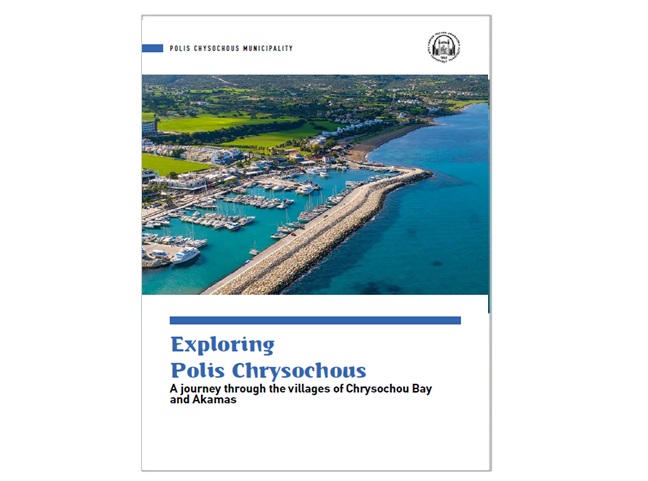
In northwestern Cyprus, between the Pafos Forest and the Akamas peninsula, lies Polis Chrysochous, a place where history, nature, the sea and culture come together to create a landscape of unique character.
Today’s Polis Chrysochous is built in the area of ancient Marion, one of the ten ancient kingdoms of Cyprus. During the Hellenistic and Medieval periods, the area was known as Arsinoe, while in antiquity it was known as Marion.
A journey through the area is much more than a beautiful sightseeing experience. It is also a journey through centuries of history, geography, natural heritage and the cultural identity of western Cyprus.
Polis Chrysochous Through Time
The area is believed to have been inhabited as early as the Cypro-Archaic period (725–475 BC) and was one of the ten ancient kingdoms of Cyprus.
Based on epigraphic and numismatic evidence discovered to date, we know the names of some of the kings of Marion who ruled during the 5th and 4th centuries BC. The area’s geographical position on the northwestern coast of Cyprus played an important role in the development of the ancient kingdom.
Marion was one of the wealthiest ancient kingdoms of Cyprus. Its proximity to the rich copper deposits of the Limni area, together with the presence of a harbour, favoured the development of trade and connections with other parts of the Mediterranean.
Its western geographical position also brought it closer to mainland Greece and to the maritime routes of the western Mediterranean.
A Landscape Between the Sea and Akamas
Chrysochous Bay is characterised by a distinctive natural landscape. The vast blue expanse of the Mediterranean, extensive beaches, sunlit plains and picturesque villages come together to create a landscape with a strong sense of place.
The area attracts visitors who appreciate nature, history and culture, as well as those seeking peaceful moments by the sea, away from the crowds of the larger tourist resorts.
Polis Chrysochous also provides a natural starting point for exploring Akamas and the villages around Chrysochous Bay.
Routes to Polis Chrysochous
From Pafos, Polis Chrysochous can be reached by two different routes.
One route passes through the lush green village of Stroumpi and the mountainous hinterland, while the other follows the coastal road via Pegeia, offering views across the deep blue of the Mediterranean and the gentle rises of the imposing Laona plateau.
Each route reveals a different aspect of the Cypriot landscape.
Latsi and Akamas
Latsi, with its beaches, small harbour, restaurants and tourist accommodation, is today one of the area’s main points of reference.
From here, organised boat excursions are available along the eastern coastline of Akamas, towards the famous Baths of Aphrodite and Fontana Amorosa, and as far as Cape Akamas.
The neighbouring Akamas peninsula is one of Cyprus’s most important natural areas, offering a unique combination of coastal landscapes, wild vegetation and remarkable biodiversity.
A Precious Marine World
The sea surrounding the area is much more than a place for recreation. It is an important habitat for many marine species and a particularly valuable area for Mediterranean biodiversity.
The marine ecosystems of the region are home to species such as the loggerhead sea turtle and the Mediterranean monk seal. Of particular importance is also the presence of Posidonia oceanica, a marine flowering plant that forms one of the most important ecosystems in the Mediterranean.
One of the deepest Posidonia meadows in the Mediterranean has been identified in the Akamas area. These meadows provide important habitats for marine life and contribute to maintaining the ecological balance of the coastal environment.
The area’s beaches are also important nesting sites for loggerhead sea turtles, adding another significant dimension to the natural heritage of Chrysochous Bay.
A Place with a Deep Cultural Identity
Yet Polis Chrysochous cannot be fully understood through its natural landscape alone.
A modern town that developed on the site of ancient Marion, one of the most important kingdoms of ancient Cyprus, carries a history spanning more than two millennia.
Archaeology, history, geography, traditions and the relationship between local communities and the sea come together to shape the area’s distinctive cultural identity.
From the Guidebook “Exploring Polis Chrysochous”
This journey draws on material from the guidebook “Exploring Polis Chrysochous – A Journey through the Villages of Chrysochous Bay and Akamas”, a special publication for the Municipality of Polis Chrysochous, dedicated to the history, geography, natural and cultural heritage of the area.
SELAS contributed to the publication and documentation of the project, helping to record and highlight the cultural and geographical identity of the area.
The publication is available at the Polis–Latsi Sea and Culture Museum and provides a particularly useful ource for anyone wishing to explore Polis Chrysochous, the villages of the bay and Akamas in greater depth.
Read more about SELAS’s contribution to the Sea and Culture Museum of Polis–Latsi.
An extensive description of the area is also included in the publication Touring Guide of Pafos, which presents important aspects of the history, geography and cultural heritage of Pafos District.
A Journey Worth Discovering
Polis Chrysochous is a place where the past coexists with the present. Ancient Marion, Arsinoe, modern Polis, Chrysochous Bay, Latsi and Akamas are different pieces of a shared and continuous story.
A journey through the area is, at the same time, a journey through the history, nature and culture of Cyprus. A journey worth discovering.